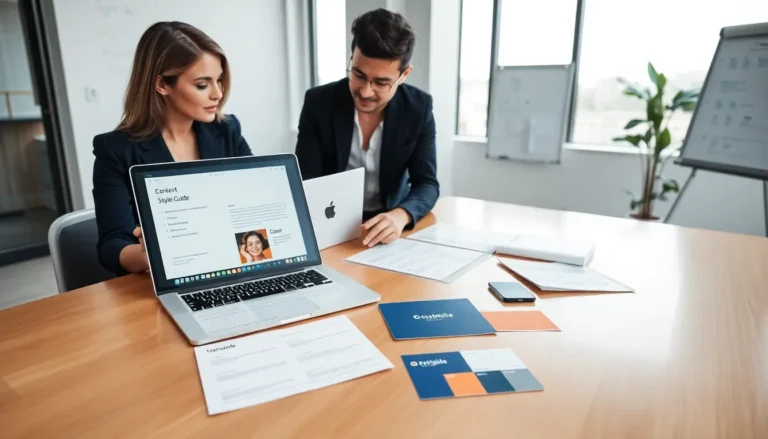

Style guides trends 2026 point to major shifts in how brands create and maintain their visual identity systems. Companies are moving away from static PDF documents toward dynamic, living standards that adapt to new channels and technologies. The changes reflect broader shifts in design thinking, user expectations, and business needs.
This year brings five key developments that design teams and brand managers should watch closely. From modular systems to AI-powered management tools, these style guides trends 2026 will shape how organizations communicate their identity across every touchpoint.
Table of Contents
ToggleKey Takeaways
- Style guides trends 2026 show brands shifting from static PDFs to dynamic, modular systems with “core” and “flex” zones for greater flexibility.
- AI-integrated tools now scan designs for brand inconsistencies, automate translations, and track version changes across global teams.
- Accessibility and inclusive design have become mandatory standards, with style guides specifying contrast ratios, alt-text templates, and diverse representation guidelines.
- Sustainability messaging guidelines help brands avoid greenwashing by defining approved environmental claims and low-impact design options.
- Cross-platform consistency requires style guides to address voice AI, AR/VR environments, and motion design while maintaining unified brand identity.
- Living digital style guides that update in real-time are replacing static documents to keep distributed teams aligned across all channels.
The Rise of Flexible and Modular Style Systems
Static style guides are fading fast. Brands in 2026 are adopting modular systems that allow teams to mix and match design elements based on context. Think of it like building blocks, each piece works independently but connects seamlessly with others.
This shift makes sense. A brand appears on websites, apps, social media, packaging, physical stores, and emerging platforms like AR environments. One rigid set of rules can’t cover all these scenarios effectively.
Modular style guides break down into component libraries. Typography modules define font hierarchies for different screen sizes. Color modules include primary palettes plus extended options for specific use cases. Layout modules provide grid systems that adapt to various formats.
The style guides trends 2026 show brands creating “core” and “flex” zones within their systems. Core elements stay consistent everywhere, logos, primary colors, and key typography choices. Flex zones allow creative teams to experiment within defined boundaries.
Design systems like this reduce bottlenecks. Teams don’t need approval for every small decision. They grab the right modules and build. Speed increases without sacrificing brand consistency.
AI-Integrated Style Guide Management
AI tools are changing how companies manage their style guides in 2026. These systems do more than store brand assets, they actively help teams apply guidelines correctly.
Smart style guide platforms now scan designs and flag inconsistencies. Upload a social media graphic, and the system checks if colors match brand specifications. It identifies typography errors. It spots logo misuse before assets go live.
Some platforms generate on-brand content suggestions. A marketing team needs a banner ad. The AI pulls approved imagery, applies correct color treatments, and suggests layout options that follow the style guide.
The style guides trends 2026 also include AI-powered translation features. Global brands need their guidelines accessible in multiple languages. AI handles translation while preserving technical accuracy, keeping color codes, spacing measurements, and terminology consistent across versions.
Version control gets smarter too. AI tracks changes across distributed teams. It alerts stakeholders when someone updates a guideline. It maintains audit trails showing who changed what and when.
These tools don’t replace human creativity. They handle compliance so designers can focus on strategic work. The result? Faster production cycles and fewer brand inconsistencies reaching the public.
Accessibility and Inclusive Design as Core Standards
Accessibility has moved from nice-to-have to non-negotiable in style guides trends 2026. Leading brands now embed inclusive design principles directly into their foundational standards.
Color contrast requirements appear as mandatory specifications, not suggestions. Style guides define minimum contrast ratios for text and interactive elements. They include alternative color pairings for users with color vision deficiencies.
Typography sections address readability for diverse audiences. Guidelines specify minimum font sizes, line heights, and letter spacing. They identify typefaces tested for dyslexia-friendly characteristics.
Style guides in 2026 include comprehensive alt-text standards. Teams receive templates and examples for writing image descriptions. Video content guidelines require captions and audio descriptions.
Inclusive imagery guidelines have expanded significantly. Brands define representation standards covering age, ability, ethnicity, body type, and gender expression. Stock photo libraries get curated with these principles in mind.
The legal landscape drives some of this change. Accessibility lawsuits continue rising. But smart brands recognize the business case too, accessible design reaches more customers. It often improves usability for everyone.
Style guides now treat accessibility as a design constraint like any other. Just as brands specify exact hex colors, they specify exact WCAG compliance levels.
Sustainability Messaging and Visual Guidelines
Environmental responsibility shapes style guides trends 2026 in visible ways. Brands are creating specific guidelines for communicating sustainability claims accurately and consistently.
This matters because greenwashing accusations damage reputations. Vague environmental claims face increasing scrutiny from regulators and consumers. Style guides now include approved language for sustainability messaging. They define what terms like “eco-friendly” or “carbon neutral” mean in the brand’s context.
Visual guidelines address sustainability too. Some brands specify design approaches that reduce environmental impact. Digital-first thinking minimizes printed materials. When print is necessary, guidelines recommend paper stocks and inks.
Color palettes in 2026 style guides sometimes include “low-ink” alternatives. These options maintain brand recognition while using less pigment in printing applications.
Packaging guidelines get detailed attention. Style guides define how to present recycling information, material composition, and disposal instructions. Consistency helps consumers make informed choices.
Photography and illustration guidelines address environmental themes. Brands define how to show products in natural settings authentically, avoiding visual clichés that suggest greenwashing.
The best style guides connect sustainability messaging to brand values. They explain why environmental responsibility matters to the organization. This context helps content creators communicate authentically rather than performatively.
Cross-Platform Consistency in an Omnichannel World
Brands interact with customers across more touchpoints than ever. Style guides trends 2026 address this reality with specific guidance for each channel while maintaining unified identity.
Social platforms each have unique requirements. A style guide might specify how the brand voice shifts between LinkedIn and TikTok. Visual treatments adapt to platform norms without losing recognition.
Voice and conversational AI guidelines are becoming standard inclusions. As brands deploy chatbots and voice assistants, style guides define personality traits, vocabulary preferences, and response patterns. The brand sounds consistent whether customers read a webpage or talk to a virtual assistant.
Augmented and virtual reality environments need their own specifications. How does a logo behave in 3D space? What colors work in immersive environments? Forward-thinking style guides in 2026 address these questions.
Motion design standards have expanded considerably. Brands define animation principles, timing, easing, and movement styles that feel consistent across video, web interactions, and app experiences.
Style guides now function as living digital resources rather than static documents. They connect directly to asset libraries. They update in real-time. Teams across the globe access the same current version.
The omnichannel challenge requires style guides that scale. Brands can’t write separate rules for every platform. Instead, they define principles flexible enough to guide decisions in contexts that don’t exist yet.